
Relocation guide · Phoenix & the East Valley
Moving to Phoenix & the East Valley
Moving to the Phoenix area means choosing one of more than a dozen cities, planning around a hot summer, and handling a short list of Arizona to-dos: an MVD visit, an emissions test, utilities by address, and HOA documents. This guide covers each one with public sources, plus all 13 cities we work in.
By Wes Bender, Bender Group AZ · Updated November 2026 · Figures dated and sourced below.
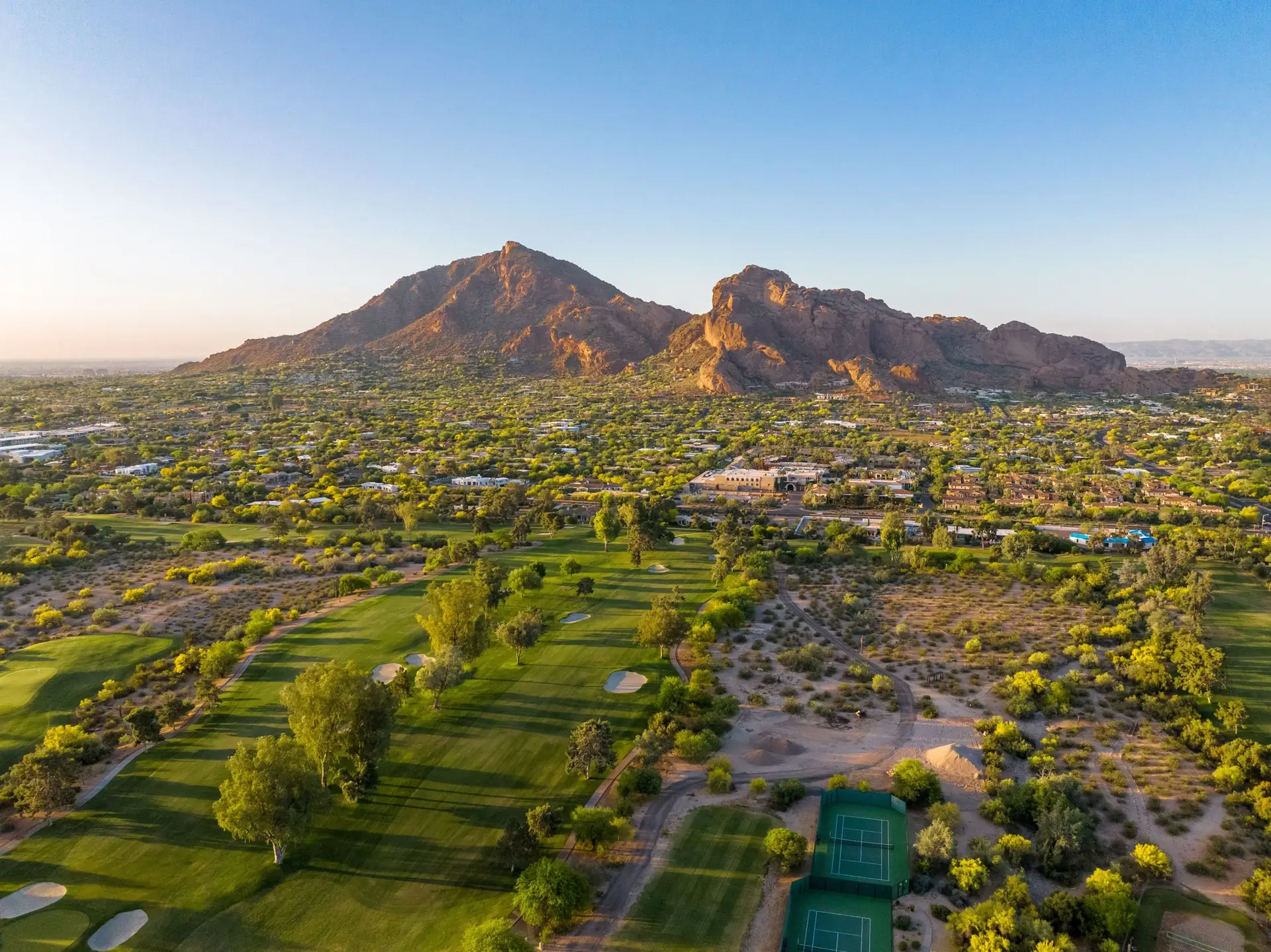
What should you know before moving to Phoenix? The Valley is a large metro of separate cities, so start by choosing an area: central Phoenix, the East Valley (Tempe, Mesa, Chandler, Gilbert, Queen Creek, San Tan Valley) or the West Valley. Then plan for summer heat, register with Arizona’s MVD, and set up electric and water service for your address.
The lay of the land
How is the Phoenix area laid out?
Locals call the metro “the Valley.” It is mostly in Maricopa County, which the Census Bureau estimates had 4,689,558 residents on July 1, 2025, and it reaches south into Pinal County (539,380), home to the Town of San Tan Valley. Phoenix itself, Arizona’s capital, had an estimated 1,665,481 residents, and the City of Phoenix calls it the fifth largest city in the United States.[1][2]
Most people describe the Valley in three parts. Commutes and prices differ a lot between them, so it helps to pick a side before you pick a house.
Central Phoenix
The City of Phoenix, Arizona’s capital, including downtown and Phoenix Sky Harbor International Airport. Tempe borders it to the east.
East Valley
Tempe, Mesa, Chandler, Gilbert and Queen Creek, plus the Town of San Tan Valley in Pinal County, which incorporated in 2025.[18] Scottsdale and Paradise Valley lie to the northeast. We live in Gilbert, in the East Valley.
West Valley
Glendale, Peoria, Surprise and Goodyear, west and northwest of Phoenix.
City by city
The 13 cities we cover
Each card opens that city’s guide, or its current listings and weekly deals if the full guide is still being written. Figures are U.S. Census Bureau estimates; sources are listed at the bottom of the page.
East Valley
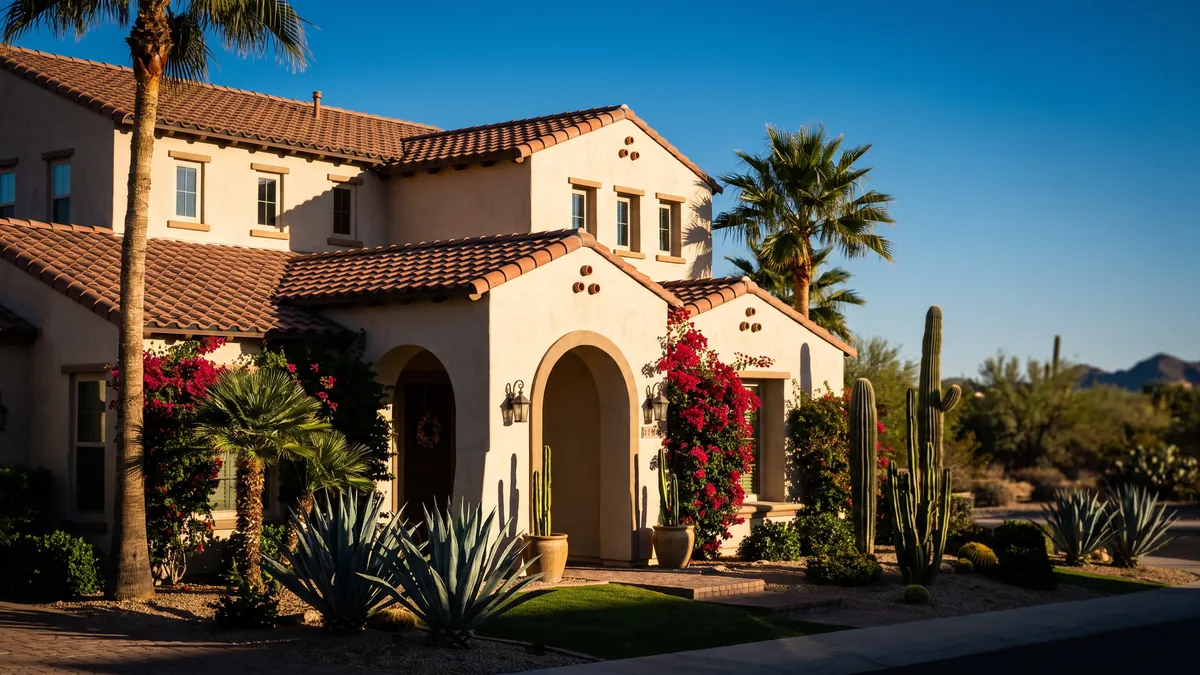
Chandler
Census median home value: $507,800 · Average commute: 23.9 min.
Open the Chandler guide →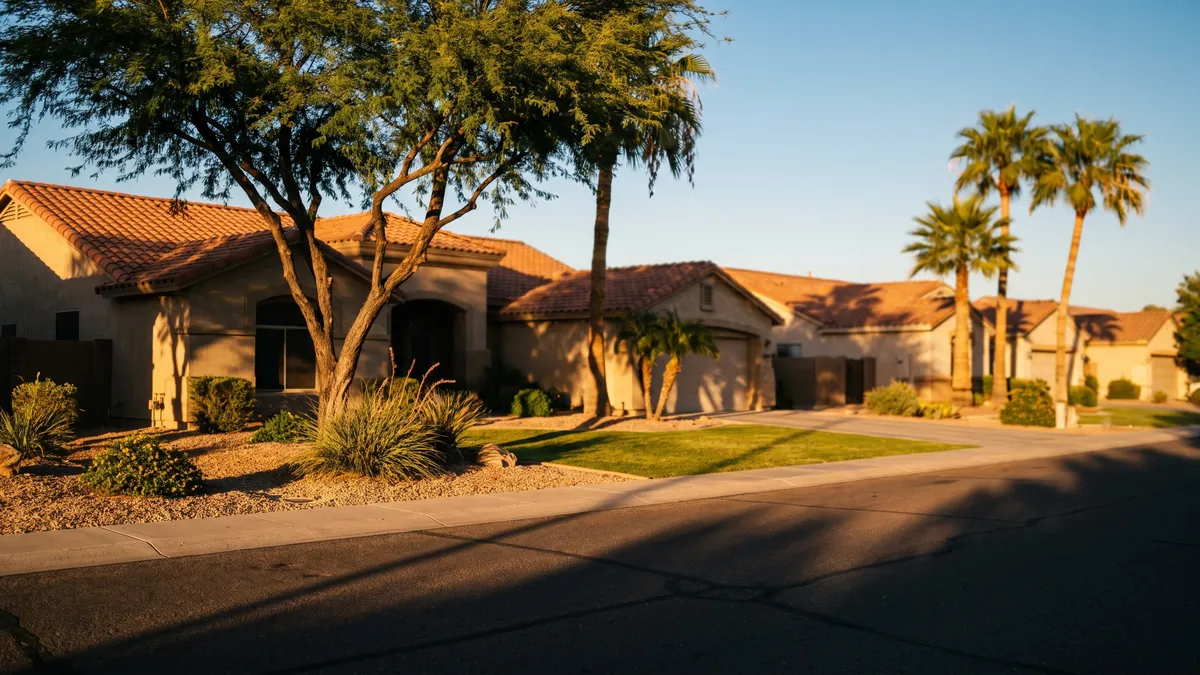
East Valley
Gilbert
Census median home value: $575,100 · Average commute: 25.9 min.
Open the Gilbert guide →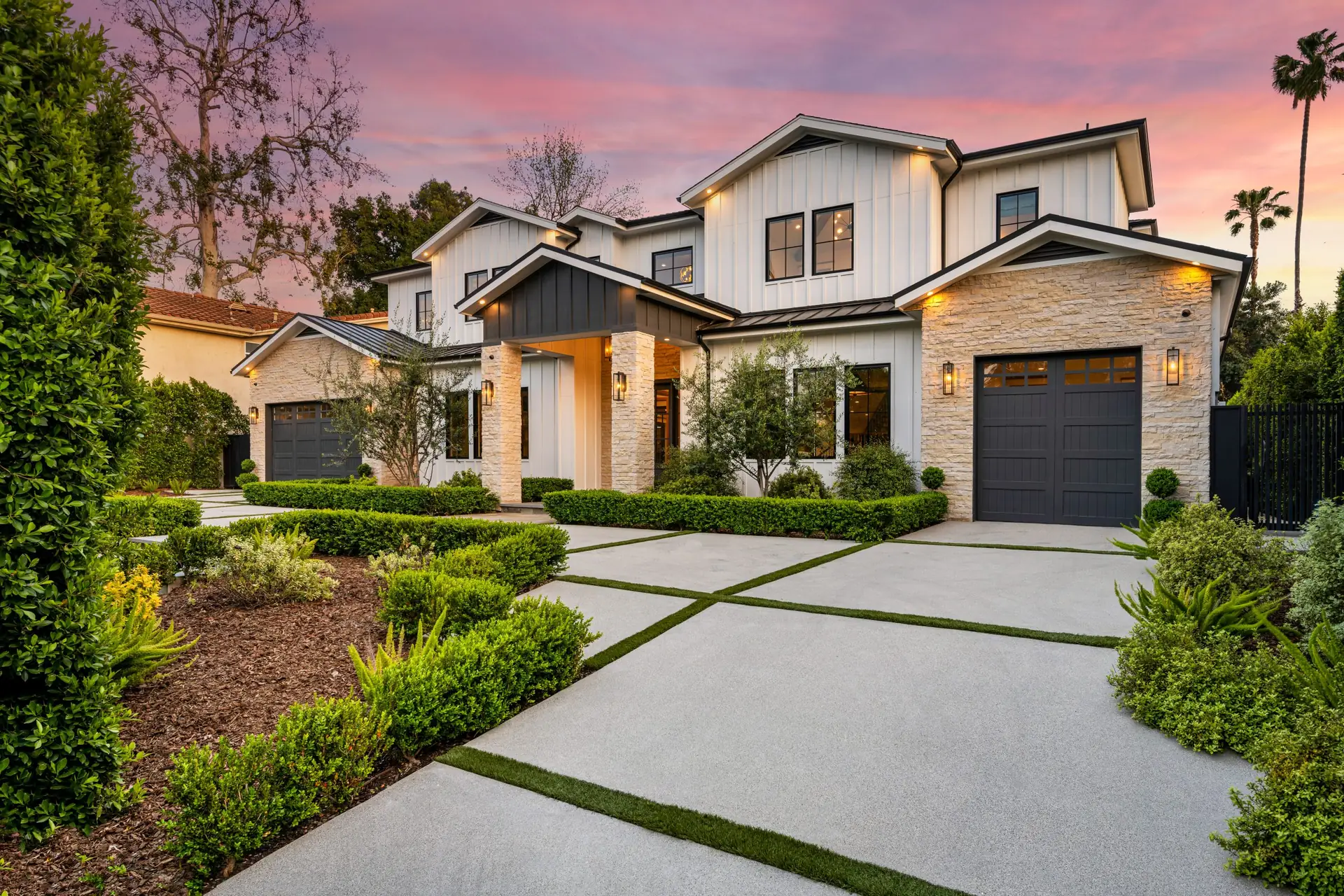
West Valley
Glendale
Census median home value: $387,500 · Average commute: 27.7 min.
Open the Glendale guide →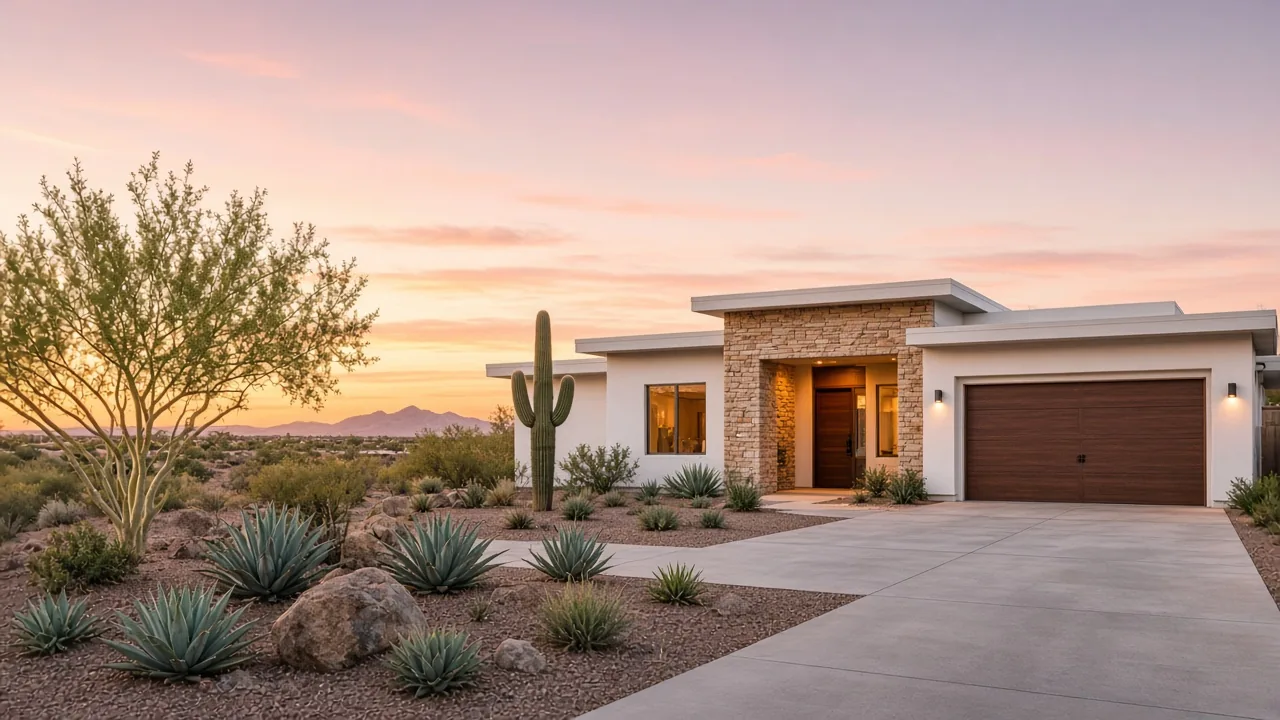
West Valley
Goodyear
Census median home value: $471,300 · Average commute: 29.6 min.
Open the Goodyear guide →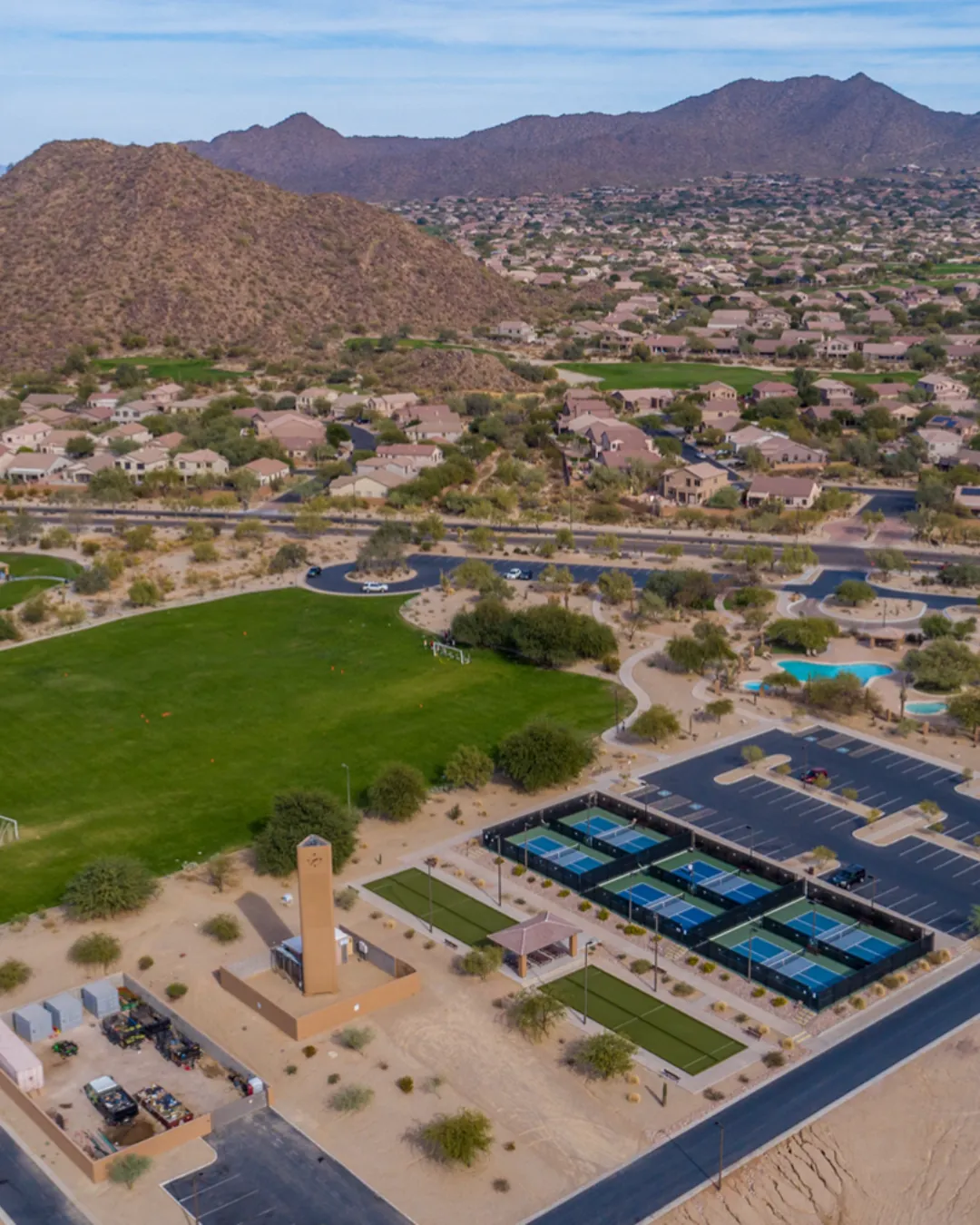
East Valley
Mesa
Census median home value: $408,000 · Average commute: 24.7 min.
Open the Mesa guide →
Northeast Valley
Paradise Valley
Census median home value: $2,000,000+ · Average commute: 20.7 min.
Open the Paradise Valley guide →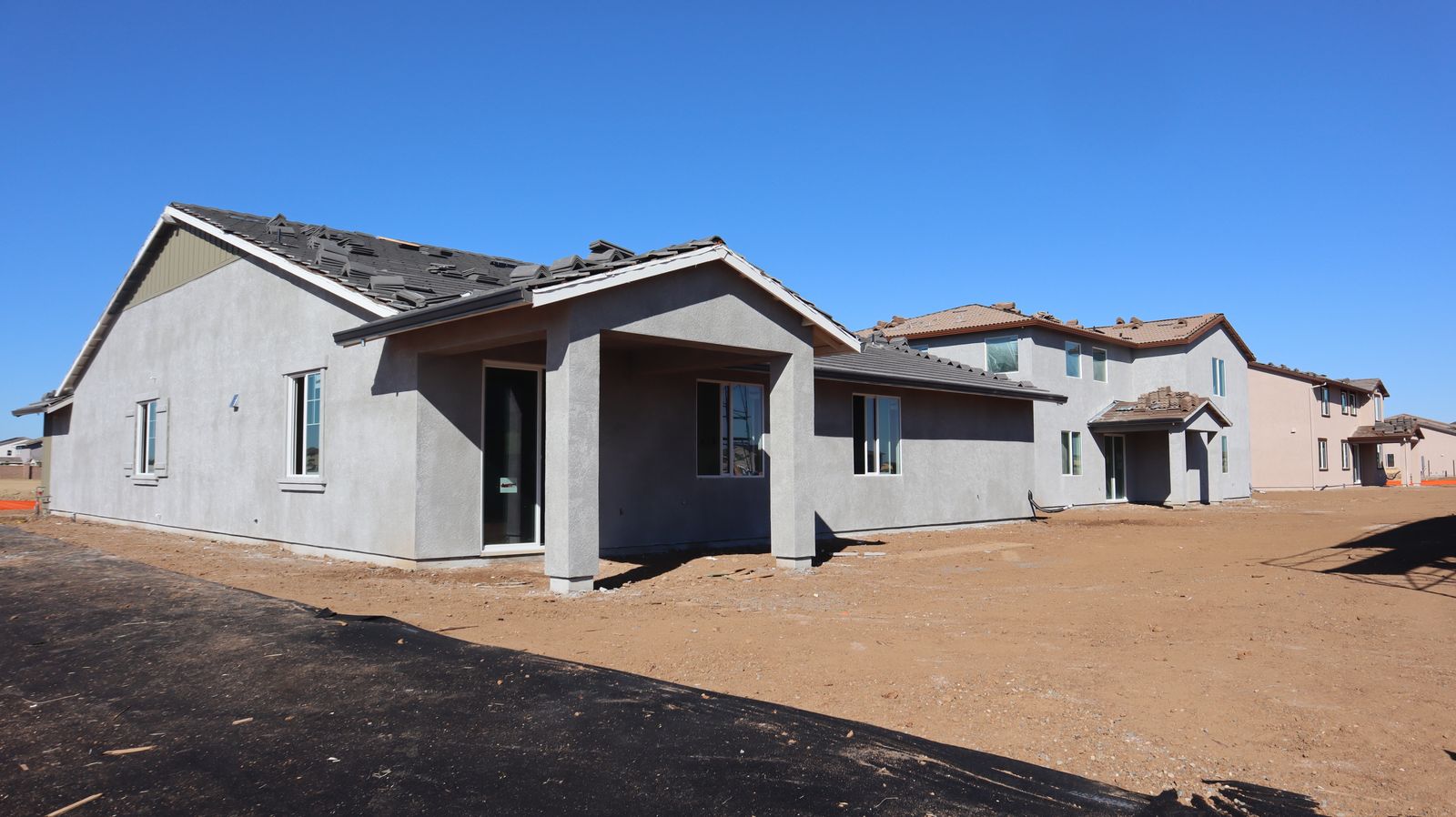
West Valley
Peoria
Census median home value: $463,600 · Average commute: 28.2 min.
Open the Peoria guide →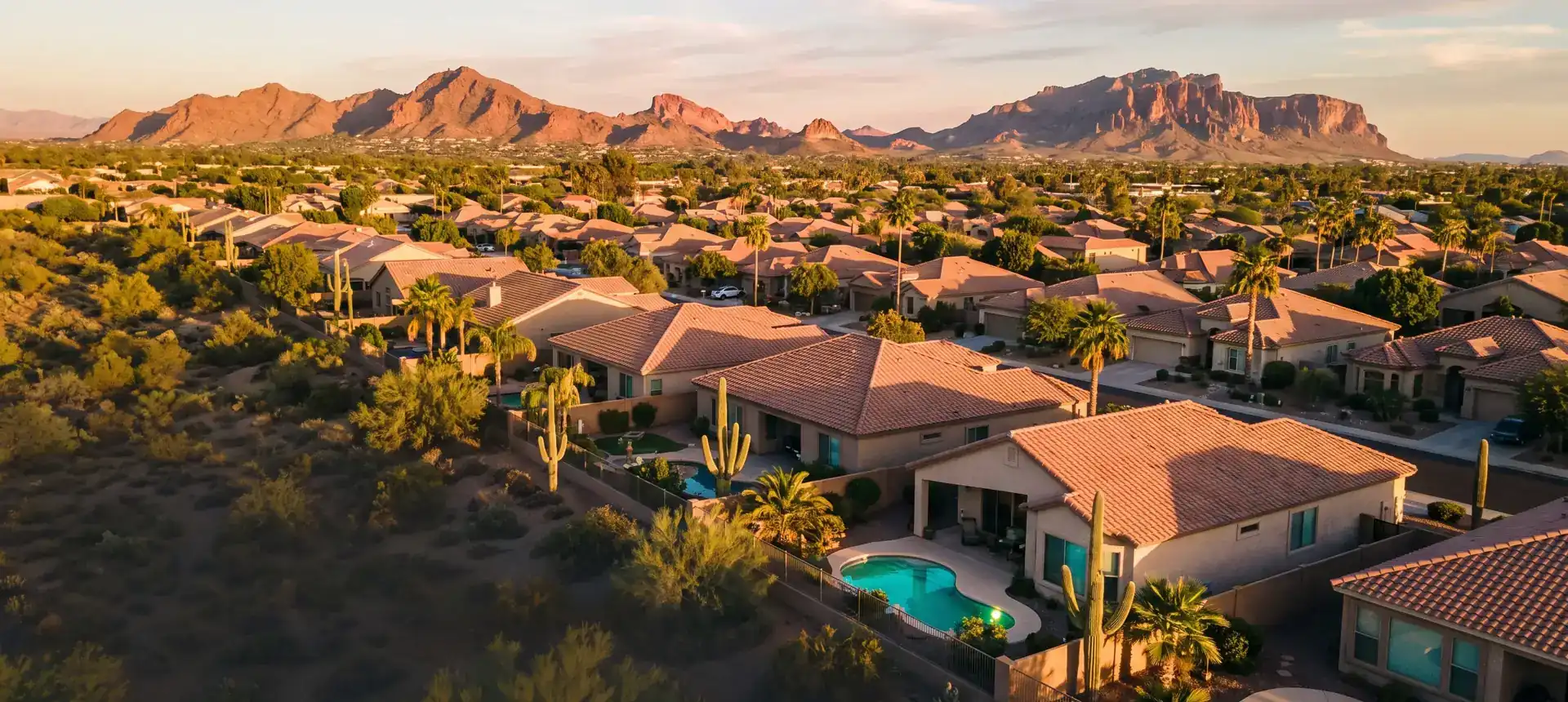
Central
Phoenix
Census median home value: $420,700 · Average commute: 25.6 min.
Open the Phoenix guide →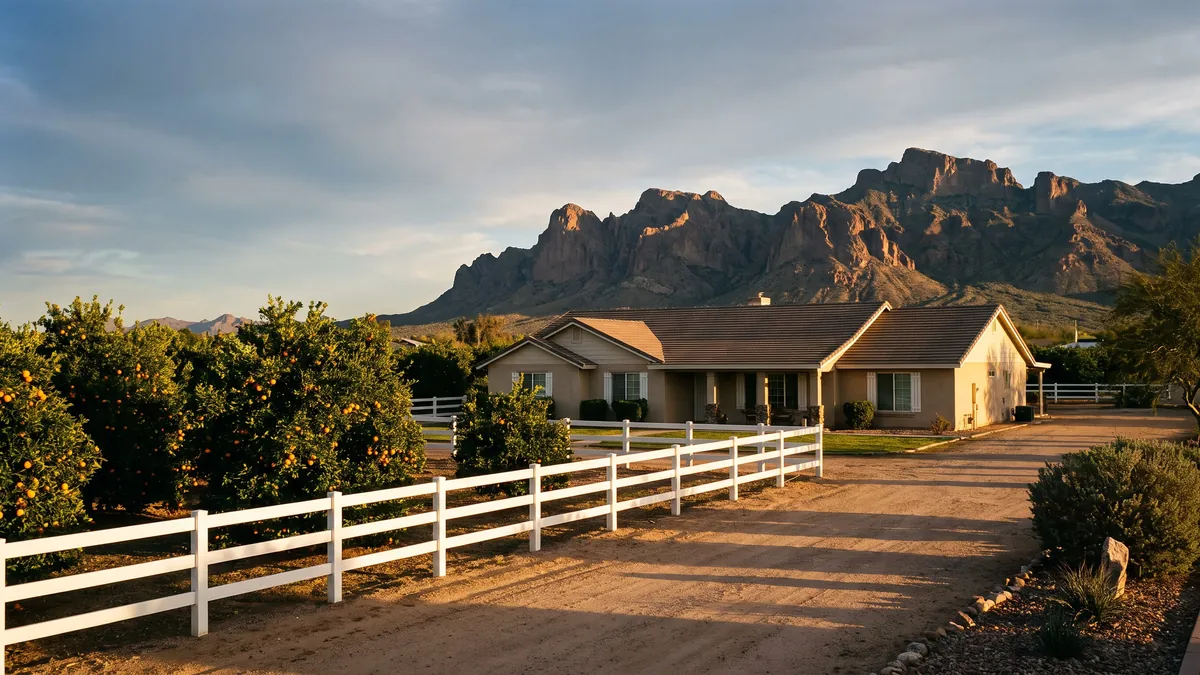
Southeast Valley
Queen Creek
Census median home value: $635,400 · Average commute: 31.1 min.
Open the Queen Creek guide →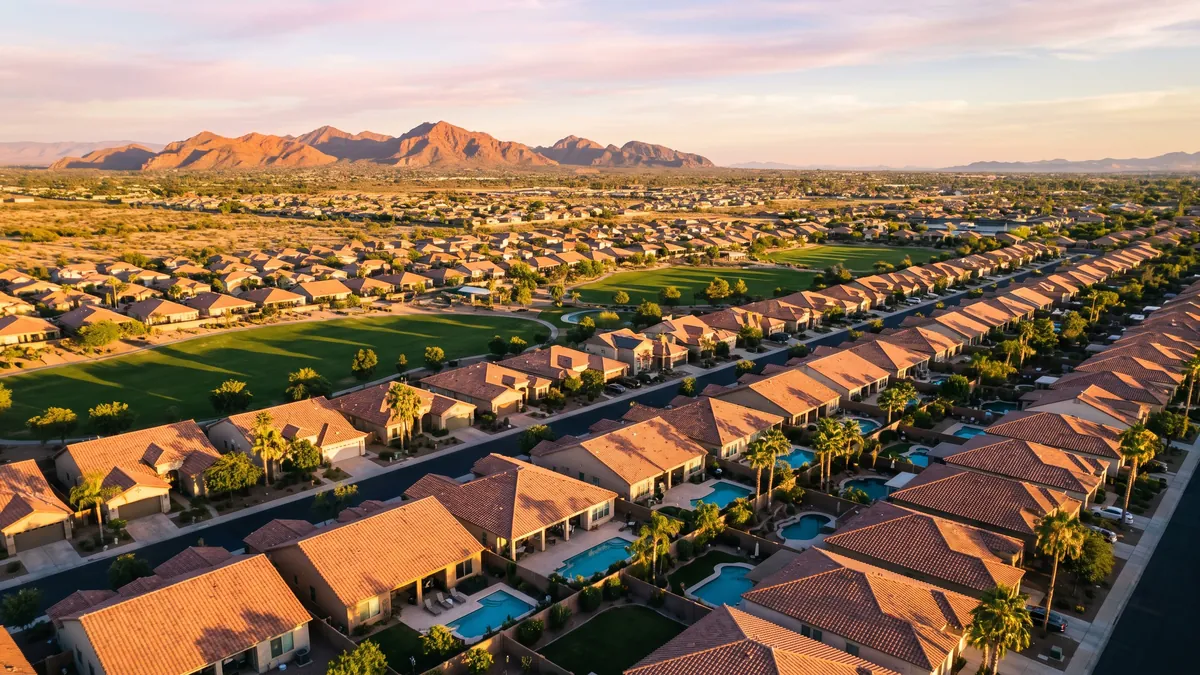
Southeast Valley (Pinal County)
San Tan Valley
Census median home value: $410,100 · Average commute: 36.4 min.
Open the San Tan Valley guide →
Northeast Valley
Scottsdale
Census median home value: $789,800 · Average commute: 21.6 min.
Open the Scottsdale guide →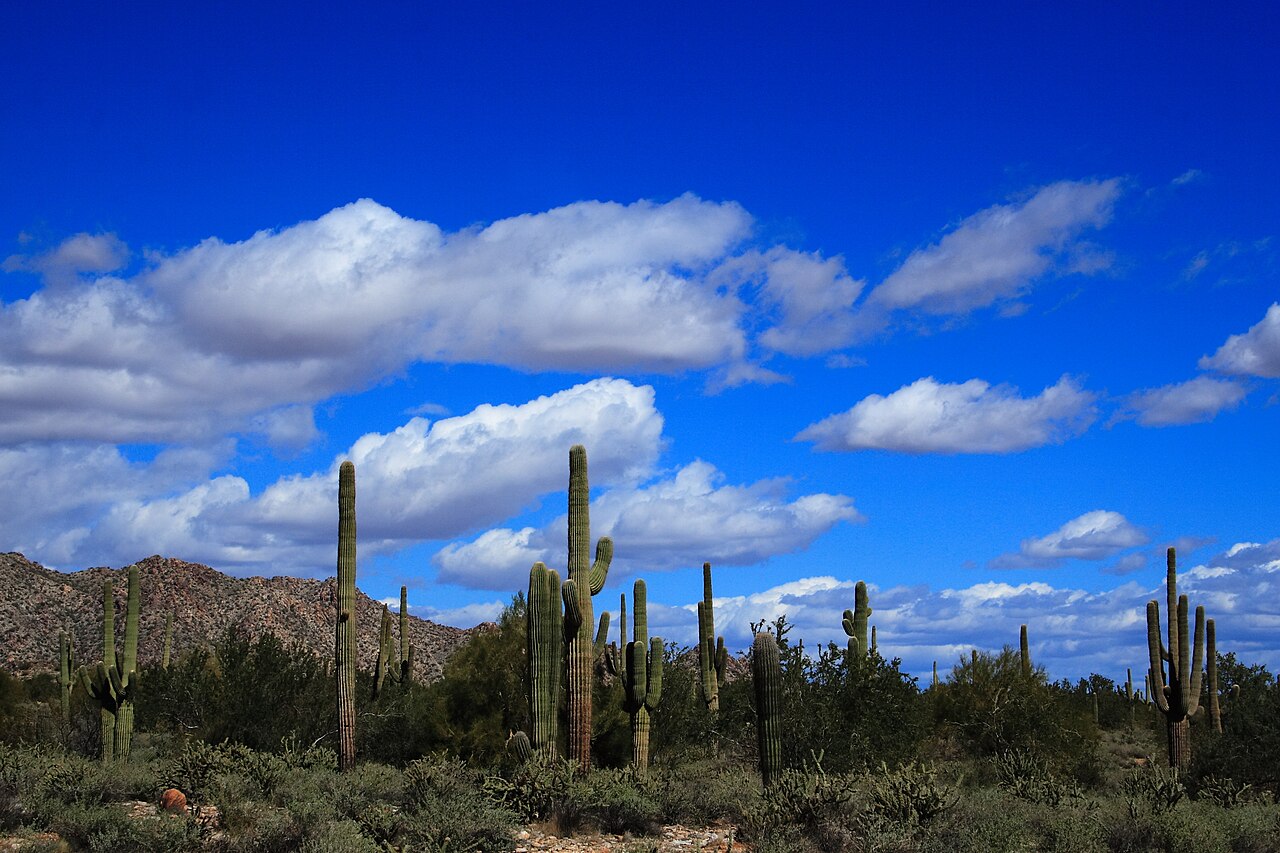
West Valley
Surprise
Census median home value: $435,100 · Average commute: 30.2 min.
Open the Surprise guide →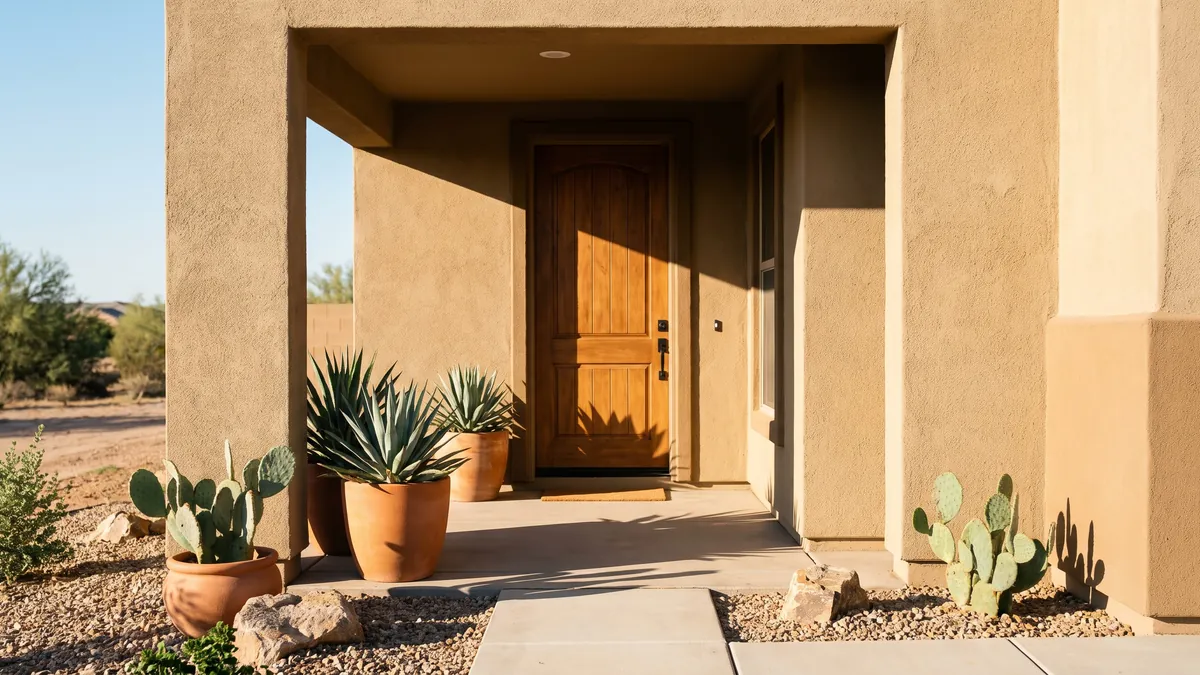
East Valley
Tempe
Census median home value: $455,400 · Average commute: 20.9 min.
Open the Tempe guide →Side by side: Census figures for each city
| City | Area | Population (July 1, 2025 est.) | Median home value (2020–2024) | Median gross rent (2020–2024) | Average commute, minutes (2020–2024) |
|---|---|---|---|---|---|
| Chandler | East Valley | 278,748 | $507,800 | $1,902 | 23.9 |
| Gilbert | East Valley | 287,285 | $575,100 | $2,110 | 25.9 |
| Glendale | West Valley | 260,572 | $387,500 | $1,528 | 27.7 |
| Goodyear | West Valley | 125,359 | $471,300 | $1,956 | 29.6 |
| Mesa | East Valley | 513,656 | $408,000 | $1,620 | 24.7 |
| Paradise Valley | Northeast Valley | 12,251 | $2,000,000+ | $3,500+ | 20.7 |
| Peoria | West Valley | 200,881 | $463,600 | $1,843 | 28.2 |
| Phoenix | Central | 1,665,481 | $420,700 | $1,582 | 25.6 |
| Queen Creek | Southeast Valley | 89,770 | $635,400 | $2,210 | 31.1 |
| San Tan Valley | Southeast Valley (Pinal County) | n/a* | $410,100 | $2,085 | 36.4 |
| Scottsdale | Northeast Valley | 243,006 | $789,800 | $2,013 | 21.6 |
| Surprise | West Valley | 175,304 | $435,100 | $2,033 | 30.2 |
| Tempe | East Valley | 190,571 | $455,400 | $1,743 | 20.9 |
| Maricopa County | County | 4,689,558 | $452,800 | $1,708 | 26.0 |
| United States | National | 341,784,857 | $332,700 | $1,413 | 26.4 |
Source: U.S. Census Bureau QuickFacts (table 1, table 2, table 3), opened November 17, 2026. Home values and rents are American Community Survey 5-year estimates (2020–2024), based on what residents reported, not current sale prices. *San Tan Valley incorporated as a town in 2025, after these surveys; the Census Bureau still reports it as a census-designated place and has no 2025 population estimate for it. For today’s prices, see this week’s best deals.
Want the community-level view? Browse all city and neighborhood guides.
Climate & seasons
What is the weather really like?

Average July high
Average January high
Days a year at 100°F or more
Average yearly rainfall
NOAA 1991–2020 climate normals, Phoenix Sky Harbor International Airport (station USW00023183).[3]
| Month | Average high (°F) | Average low (°F) | Average rain (in.) |
|---|---|---|---|
| January | 67.6 | 46.0 | 0.87 |
| April | 85.5 | 60.8 | 0.22 |
| July | 106.5 | 84.5 | 0.91 |
| October | 89.2 | 65.6 | 0.56 |
- Winter is mild. Average highs stay in the 60s and 70s from November through February.
- Summer is the planning season. Average highs are above 100°F from June through September. Schedule moving trucks, roof and A/C work, and outdoor projects for early morning.
- Monsoon runs June 15 to September 30. That is the National Weather Service’s official season. Storms usually don’t reach the Phoenix-area lower desert until early July, and they can bring damaging winds, torrential rain, frequent lightning and dust storms.[4]
- No daylight saving time. Arizona stays on standard mountain time all year, so your time difference with family back home changes twice a year.[5]
Cost of living & housing
How much does housing cost here?
The most reliable apples-to-apples comparison is the Census Bureau’s American Community Survey. For 2020–2024, it puts the median value of an owner-occupied home in Maricopa County at $452,800, compared with $332,700 for the United States as a whole. Median gross rent was $1,708 in Maricopa County versus $1,413 nationally, and median household income was $89,300 versus $80,734.[1]
Median home value, Maricopa County
Median home value, U.S.
Median gross rent, Maricopa County
Median household income, Maricopa County
Within the Valley the spread is wide: Glendale’s median home value is $387,500, Gilbert’s is $575,100, Scottsdale’s is $789,800, and Paradise Valley’s is above $2 million (see the table above).
These are survey estimates collected over five years, so they trail today’s market. For current asking prices, price cuts and builder incentives, use our weekly best deals and live home search, and run your numbers with the payment calculator.
Commutes, freeways & airports
How do people get around?
Most of the Valley drives. The Census Bureau puts the average one-way commute at 26.0 minutes in Maricopa County, from 20.9 minutes in Tempe to 36.4 minutes in San Tan Valley.[1] The freeways you will hear about most:
- Loop 202 has three named parts. The Red Mountain Freeway runs from I-10 and SR 51 near downtown Phoenix east toward Mesa, connecting the East Valley with Arizona State University, Sky Harbor and downtown. The Santan Freeway connects Chandler, Gilbert, south Mesa and Queen Creek. The South Mountain Freeway links the southeast and southwest Valley around South Mountain Park.[6]
- US 60 (Superstition Freeway) runs east–west through the East Valley, south of and parallel to much of the Red Mountain Freeway.[6]
- I-10 runs through downtown Phoenix, connecting the East Valley side with the West Valley and continuing south toward Tucson.[6]
- Loop 101 and Loop 303 are the Valley’s other two freeway loops. ADOT describes the 101, 202 and 303 loops together as the way to connect with all points of Greater Phoenix.[6]
Utilities
How do you set up utilities?
In the Valley, each service is set up separately, and the provider depends on the address. Start the calls two weeks before move-in.
Electric: SRP or APS
Most Valley homes get electricity from Salt River Project (SRP) or Arizona Public Service (APS), depending on the address. Check the address before you schedule. APS asks you to schedule a start at least three business days ahead, and either utility may ask for a deposit for a new account.[9][10]
Water, sewer & trash
Usually billed by your city or town. For example, Gilbert residents activate service through the Town of Gilbert Utilities Division, and Phoenix residents use the city’s online start-service portal.[11][12] In some areas the water provider is a private company rather than the city, so confirm it during escrow.
Gas, internet & HOA
If the home has natural gas, confirm the gas provider with the seller or landlord and schedule a start date. Ask which internet providers serve the street, and, if there is an HOA, set up dues payments and gate or amenity access.
Arizona to-dos
What do new Arizona residents need to do?
Get your Arizona driver license
Visit an MVD office (no appointment needed) with proof of authorized presence, your current out-of-state license and your Social Security number. A Travel ID (REAL ID) is optional and needs two proofs of your Arizona address.[13]
Know when you become a resident
MVD counts you as a resident if, for example, you work in Arizona, stay seven months or more in a calendar year, or register to vote here.[13]
Pass emissions, then register
Register vehicles as soon as you become a resident. In the Phoenix metro, many vehicles need an emissions test first unless they are five years old or less, 1966 or older, or electric.[14]
Read the HOA packet
For a sale in a planned community, Arizona law requires the HOA (or the seller, in small communities) to provide bylaws, rules, the declaration, recent board minutes and a dated fee statement within 10 days.[15] Our HOA checklist covers what to look for.
Pools, summer & monsoon
Living with a pool and the summer
- Pool barriers. Arizona’s pool enclosure law sets a baseline of a five-foot barrier with self-closing, self-latching gates, with some exceptions, and cities and counties add their own codes. In unincorporated Maricopa County, for example, a barrier permit must be issued before a new pool is plastered or filled.[16][17] Have your inspector look at the fence, gates and any door alarms.
- Summer prep. Ask for the A/C service history, the age of the units and the roof, and the last few summer electric bills before you buy or sign a lease.
- Monsoon prep. Look at drainage, gutters and yard grading during inspections, and follow the National Weather Service’s advice to stay off flooded roads during storms.[4]
Rent first or buy?
Should you rent first or buy right away?
Rent first if…
- You don’t know the Valley yet and want to test commutes.
- Your job location or other plans are still settling.
- You want to see a summer before you commit.
Buy sooner if…
- You know the city or community you want.
- You are pre-approved and your timeline is fixed.
- You want to avoid moving twice.
New construction
Thinking about a new build?
New-build communities are part of the mix in many of the cities above. Builders write their own contracts and set their own timelines and incentives, and the on-site sales team represents the builder. Ask how agent registration works before your first model-home visit, and see our new homes page for current options and the builder incentives list.
Relocating with Bender Group AZ
How we help out-of-state buyers

We’re Wes and Lisa Bender. We live in Gilbert, and Wes has been licensed since 2014, with 300+ closings in the Phoenix area. Relocation is mostly about narrowing choices fast, so here’s how we do it from a distance:
- A video call to narrow the map to two or three cities based on your budget, commute and must-haves.
- Live video walkthroughs of homes and the streets around them, so you see what photos leave out.
- Document review of HOA packets, disclosures and inspection reports, with plain-language notes.
- Coordination while you’re away for inspections, appraisal and closing details.
Moving in the next 6–12 months?
Tell us where you’re moving from, when, and what matters most. We’ll send a short list of cities and communities to look at, then set up live video tours when you’re ready. Use our contact form or call (602) 844-4278.
Questions
Moving to Phoenix: FAQ
What cities are in the East Valley?
The East Valley usually means the cities east of central Phoenix: Tempe, Mesa, Chandler, Gilbert and Queen Creek, plus the Town of San Tan Valley just to the southeast in Pinal County. Scottsdale and Paradise Valley sit northeast of Phoenix and are sometimes grouped with the East Valley.
How hot does it get in Phoenix?
Very hot in summer. Based on NOAA’s 1991-2020 climate normals for Phoenix Sky Harbor, the average high is 106.5°F in July and 67.6°F in January, and the airport averages about 111 days a year at or above 100°F.
When is monsoon season in Arizona?
The National Weather Service defines Arizona’s monsoon season as June 15 through September 30. Storms usually do not reach the Phoenix-area lower desert until early July, and they can bring damaging winds, torrential rain, frequent lightning and dust storms.
Does Arizona change its clocks for daylight saving time?
No. Arizona law keeps the state on standard mountain time all year and rejects daylight saving time, so the clocks do not change in spring or fall.
How soon do I need an Arizona driver license after moving?
Arizona’s MVD says you need an Arizona license and vehicle registration once you become a resident, for example when you start working in Arizona or stay seven months or more in a calendar year. Register any vehicle you bring as soon as you become a resident.
Do I need an emissions test to register my car in the Phoenix area?
Often, yes. ADOT says emissions testing is required in the Phoenix metro area, and most vehicles there need a test unless the vehicle is five years old or less, a 1966 model year or older, or electric. Complete the test before your MVD visit.
Who provides electricity in the Phoenix area?
For most Valley homes it is either SRP or APS, and which one serves you depends on the address, so check it before you schedule service. Water and trash usually come from your city or town and are set up separately.
Should I rent first or buy right away when I move to Phoenix?
It depends on your timeline and how well you know the Valley. Renting for a lease term lets you learn commutes and neighborhoods first, while buying sooner can make sense if you already know the area you want. We can help you compare both.
What should I know about HOAs in Arizona?
Check whether the home is in a homeowners association before you write an offer. In Arizona, the association must provide its bylaws, rules, declaration, recent board minutes and a dated statement with assessment and fee information within 10 days after it receives notice of a pending sale, so review those documents before your contingency period ends.
Can you help me buy a home in Phoenix before I move?
Yes. We work with out-of-state buyers through video calls, live video walkthroughs of homes and neighborhoods, and document review, then coordinate inspections and closing details while you are out of state.
Sources
- U.S. Census Bureau, QuickFacts: Maricopa County, Pinal County, Phoenix, Gilbert, Chandler and Mesa (link); Scottsdale, Tempe, Glendale, Peoria, Surprise and Goodyear (link); Queen Creek, San Tan Valley CDP, Paradise Valley and the U.S. (link). Population estimates V2025; ACS 5-year 2020–2024. Opened Nov 17, 2026.
- City of Phoenix, Moving to Phoenix.
- NOAA National Centers for Environmental Information, U.S. Climate Normals 1991–2020, monthly and annual normals for Phoenix Sky Harbor (USW00023183).
- National Weather Service Phoenix, Monsoon Awareness and The Four Peaks newsletter, May 2011; NWS Tucson, Monsoon Safety.
- Arizona Revised Statutes § 1-242, Standard time.
- Arizona Department of Transportation, Don’t get thrown for a loop (Loop 202 segments), Sept. 1, 2021.
- Phoenix Sky Harbor International Airport, About PHX.
- Mesa Gateway Airport, gatewayairport.com.
- APS, Residential start service.
- SRP, Start electric service.
- Town of Gilbert, Utilities.
- City of Phoenix, Start service ePortal.
- ADOT Motor Vehicle Division, New to AZ – Welcome!.
- ADOT Motor Vehicle Division, Emissions Testing and Vehicle Registration.
- Arizona Revised Statutes § 33-1806, Sale of properties; information required.
- Arizona Revised Statutes § 36-1681, Pool enclosures.
- Maricopa County Planning & Development, Residential Pool and Barrier Requirements.
- Pinal County, Supervisors Formally Approve Incorporation of STV, Sept. 17, 2025; Town of San Tan Valley.
Figures and rules were checked against the sources above on November 17, 2026, and can change. Confirm requirements with the agency before you act. City descriptions are general and are not a guarantee about any property or neighborhood.
Talk with us
Planning a move to the Valley?
Tell Wes and Lisa your timeline and what you need. We’ll help you narrow the cities and set up live video tours.
Bender Group AZ, Wes and Lisa Bender
Done Deal Brokerage, 698 N Iowa St, Chandler, AZ 85225