
Buyer guide · Arizona
How to Buy a Home in Arizona: Step-by-Step Buyer Guide
Buying a home in Arizona follows a clear order: get in the right position, get pre-approved around a comfortable payment, search with a plan, write a strong offer, then move through escrow: earnest money, the 10-day inspection period, the BINSR, appraisal, loan approval, the final walkthrough and closing.
By Wes Bender, licensed since 2014 · Updated November 20, 2026
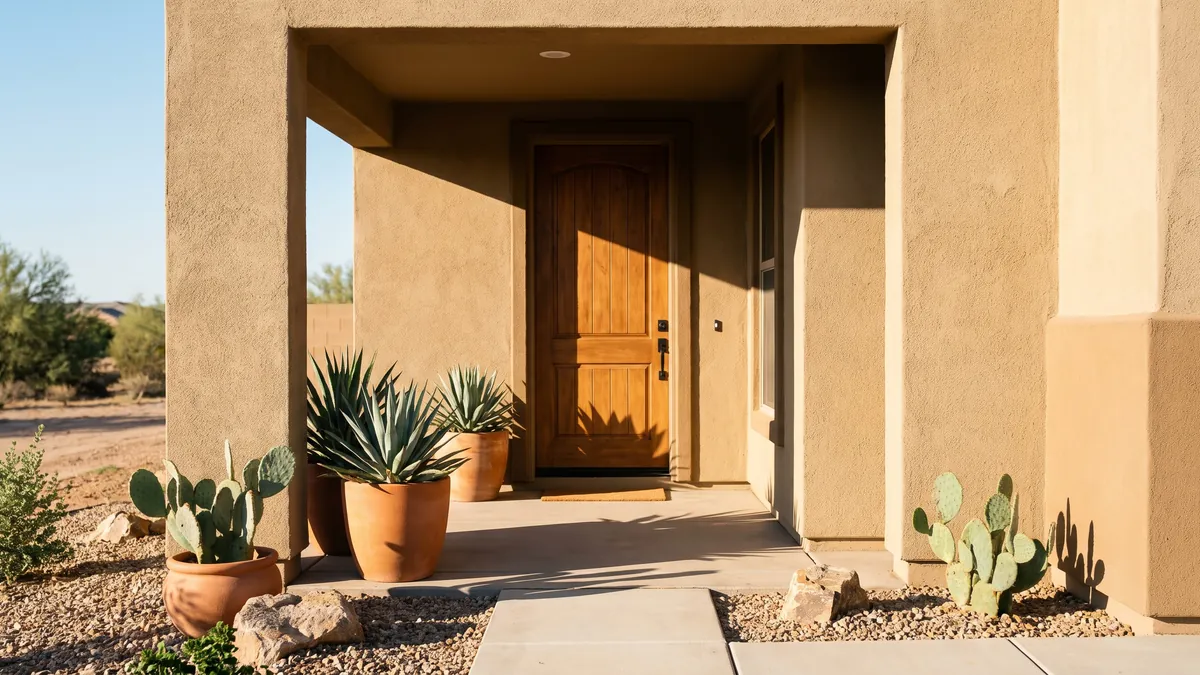
How do you buy a house in Arizona? Get pre-approved, set a comfortable budget, tour homes with a buyer’s agent under a written agreement, and make an offer on the Arizona REALTORS® contract. After acceptance, deposit earnest money, inspect during the typically 10-day inspection period, negotiate repairs with a BINSR, finish the appraisal and loan, and close when the deed records.
The steps at a glance
13 steps from ready to keys.
Jump to any step. Each one covers what’s happening, your homework and what comes next.
Step 1 of 13
Getting started: are you in the right position to buy?

Most buyers start by asking whether now is a good time to buy. The better question is whether you’re in the right position to buy. Before you look at homes, get clear on your readiness across four pillars: financial, emotional, lifestyle and strategic. Then book a buyer consult and sign a buyer broker agreement.
Your homework
- Check your readiness. Rate yourself on the Four Pillars in Step 1 of the Strategic Homebuyer course. Your lowest pillar sets your pace, not the market.
- Book your consult with Wes, in person or by video: goals, timing, favorite areas and how Wes works for you.
- Sign the buyer broker agreement. A written agreement is required before touring homes with an agent. It spells out what Wes does for you and how he’s paid.
- Share your timeline: lease end, a home to sell, a job start date.
The four pillars
- Financial: the numbers beneath the decision.
- Emotional: the reason underneath the reason.
- Lifestyle: the life the home has to hold.
- Strategic: the plan that outlasts the purchase.
You can’t control the market. You can control your position. So that’s where we start.
Next: get pre-approved.
Want to go deeper? Watch Lesson 1.1: Start in the Right Place in our Strategic Homebuyer course →
Step 2 of 13
Pre-approval: know your comfortable number

A lender reviews your income, assets and credit and confirms what you can borrow, and Arizona offers include the lender’s pre-qualification form. But approval is a ceiling; comfort is the foundation. Set your budget around a monthly payment that supports your life, not the maximum a lender will approve.
Your homework
- Talk to a lender. Wes can recommend a few local options.
- Gather documents: recent pay stubs, W-2s or tax returns, bank statements and photo ID.
- Find your comfort payment with the financial strategy lessons and the mortgage payment calculator.
- Pull your own credit report free at annualcreditreport.com; it never affects your score.
- Hold steady: no new credit, job changes or big purchases until closing.
What lenders actually read
- Patterns, not just income: how steady your income has been, how you’ve handled debt, and whether you can trace where your money came from.
- Buy-now-pay-later plans can show up as scheduled payments.
- Money from Venmo, Zelle or a crypto sale needs a paper trail before a lender counts it.
- Raise anything unusual yourself, before the lender finds it.
Three numbers, not one: what you qualify for, what you can technically afford, and what actually supports your life. Shop with the third one.
Next: sort your wants from your needs.
Want to go deeper? Watch Lesson 2.1: Why Approval Amounts Do Not Matter at First in our Strategic Homebuyer course →
Step 3 of 13
Wants vs needs: search with a plan

Search filters tell you whether a home checks boxes, not whether you’d like living there. Turn your wish list into needs, wants and deal-breakers, and think about the street, the commute and the pace of life around the home, so you look at the right homes, not just more of them.
Sort your list
- Needs: must-haves like bedrooms, area and commute.
- Wants: nice-to-haves like a pool, a view or an updated kitchen.
- Deal-breakers: what you won’t accept, like a busy road or strict HOA rules.
Your homework
- Read Search with strategy.
- Not sure where you fit? Take the free Find My Sphere lifestyle assessment.
- Compare areas in our city and neighborhood guides.
- Start your search at bendergroupaz.com/search and check this week’s best deals.
Needs decide. Wants break ties.
Next: touring homes.
Want to go deeper? Watch Lesson 3.2: How to Search With Strategy in our Strategic Homebuyer course →
Step 4 of 13
Touring homes

When you tour, Wes points out what the photos don’t show. Bring a checklist, take notes and photos, and drive the area at night and at rush hour before you fall for a house.
Your touring checklist
- Roof, AC unit and water heater: age and condition.
- Stains on ceilings, under sinks and around windows.
- Smells, noise and natural light.
- Storage, closets and garage space.
- Yard, pool and which way the backyard faces.
- Photos and notes before you leave.
Your homework
- Send Wes your favorites each week.
- Drive the area at night and at rush hour.
- Ask about HOA rules, fees and what the HOA maintains.
- Looking at new construction? See the new homes guide before you walk into a model.
Found the one? Write an offer.
Want to go deeper? Watch Lesson 3.1: Why Most Home Searches Fail in our Strategic Homebuyer course →
Step 5 of 13
Writing an offer

Wes reviews recent comparable sales with you, then writes your offer on the Arizona REALTORS® residential resale purchase contract. A strong offer balances price and terms: earnest money, loan type, closing date, concessions, the inspection period and any addendums.
What goes into your offer
- Price: what you’ll pay.
- Earnest money: your good-faith deposit, held by escrow.
- Loan type: conventional, FHA, VA, USDA or cash.
- Closing date: when the deed records and the keys are yours.
- Concessions: seller credits toward your costs, if any.
- Inspection period: 10 days by default; negotiable.
- Addendums: HOA, solar (owned or leased), septic, well, or anything else the home needs.
Your homework
- Decide price and terms with Wes.
- Have your pre-approval ready.
- Plan your earnest money.
- Stay reachable. Offers move fast and may be countered.
- Go deeper with Offer intelligence.
The highest offer isn’t always the best. Clean, confident terms win too, and contingencies protect you, so know what you’re giving up before you waive one.
Offer accepted? You’re under contract.
Want to go deeper? Watch Lesson 4.1: What Actually Makes an Offer Win in our Strategic Homebuyer course →
Step 6 of 13
Under contract and escrow

When your offer is accepted, escrow opens and a neutral title company holds the money and paperwork until closing. You deposit your earnest money, finish your loan application, and start receiving the seller’s disclosures.
What’s happening
- Earnest money: deposited with escrow after acceptance. Call the title company at a verified number before any wire.
- Your loan: under the standard contract, you complete your loan application within 3 days, and your lender’s Loan Status Update is due within 10 days.
- Disclosures: the seller’s SPDS (within 3 days) and a five-year insurance claims history (within 5 days).
- Title: you’ll receive the title commitment; the contract gives you 5 days after receipt to review it and the CC&Rs.
Your team
- Wes, your agent, with you the whole way.
- Wes’s transaction manager, for documents and dates.
- The title company, for escrow and closing.
- Your lender, for the loan.
Wire fraud is real. Before you move a single dollar, call the title company at a number you already had, not one from an email, and confirm the instructions by voice.
Next: your inspection period.
Want to go deeper? Watch Lesson 5.1: What Happens After Your Offer Is Accepted in our Strategic Homebuyer course →
Step 7 of 13
The inspection period

Under the Arizona REALTORS® resale contract, your inspection period is 10 days after acceptance unless a different number is written in. It’s your window to inspect the home, review disclosures and HOA documents, get insurance quotes and research anything that matters to you.
Your homework
- Book a licensed home inspector right away.
- Add specialists as needed: termite, roof, pool, HVAC, sewer or septic.
- Review the SPDS, claims history, HOA documents and insurance quotes.
- Ask questions about anything in the area that matters to you.
HOA documents
- Arizona law (A.R.S. 33-1806) requires resale disclosures for homes in an HOA: the CC&Rs, rules, budget and fees.
- Read the rules on parking, rentals, pets, exterior changes and solar.
- Look for pending special assessments or violations.
- Your disapproval window is the inspection period, or 5 days after you receive the documents, whichever is later.
Inspectors find things in every home, even brand-new ones. That’s normal. We focus on what matters most: systems, structure and big-ticket items.
Next: the BINSR.
Want to go deeper? Watch Lesson 5.2: How to Evaluate an Inspection Without Emotion in our Strategic Homebuyer course →
Step 8 of 13
The BINSR: Buyer’s Inspection Notice and Seller’s Response
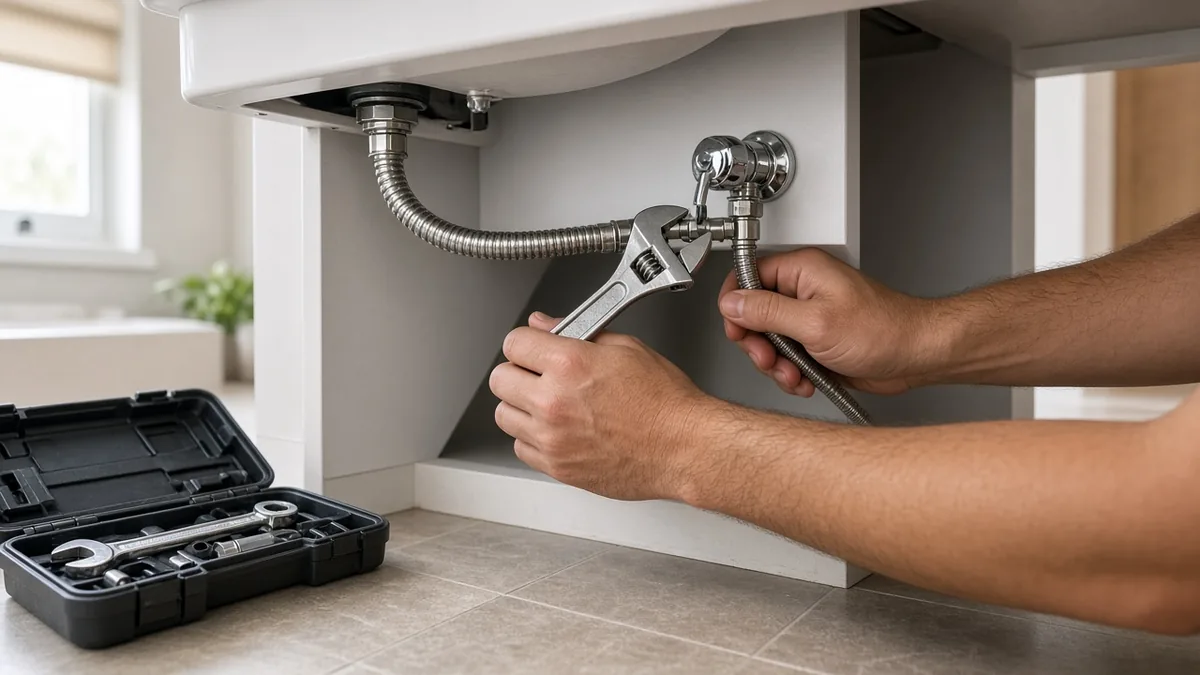
The BINSR (Buyer’s Inspection Notice and Seller’s Response) is the Arizona form you use before the inspection period ends to accept the home, cancel, or ask the seller to repair or address items. The seller has 5 days to respond, no response counts as a no, and you then have 5 days to cancel with your earnest money back or move forward.
How it works
- You deliver your BINSR before the inspection period ends.
- The seller has 5 days to respond: agree, decline or offer something else, like a credit.
- No response counts as a no.
- If items won’t be fixed, you have 5 days to cancel with your earnest money back, or move forward.
Ask for what matters
- Systems, structure and big-ticket items first.
- Credits or a price change can be simpler than repairs.
- Agreed repairs come with paid receipts before closing.
- Only written, signed agreements extend deadlines.
Next: the appraisal.
Want to go deeper? Watch Lesson 5.2: How to Evaluate an Inspection Without Emotion in our Strategic Homebuyer course →
Step 9 of 13
The appraisal
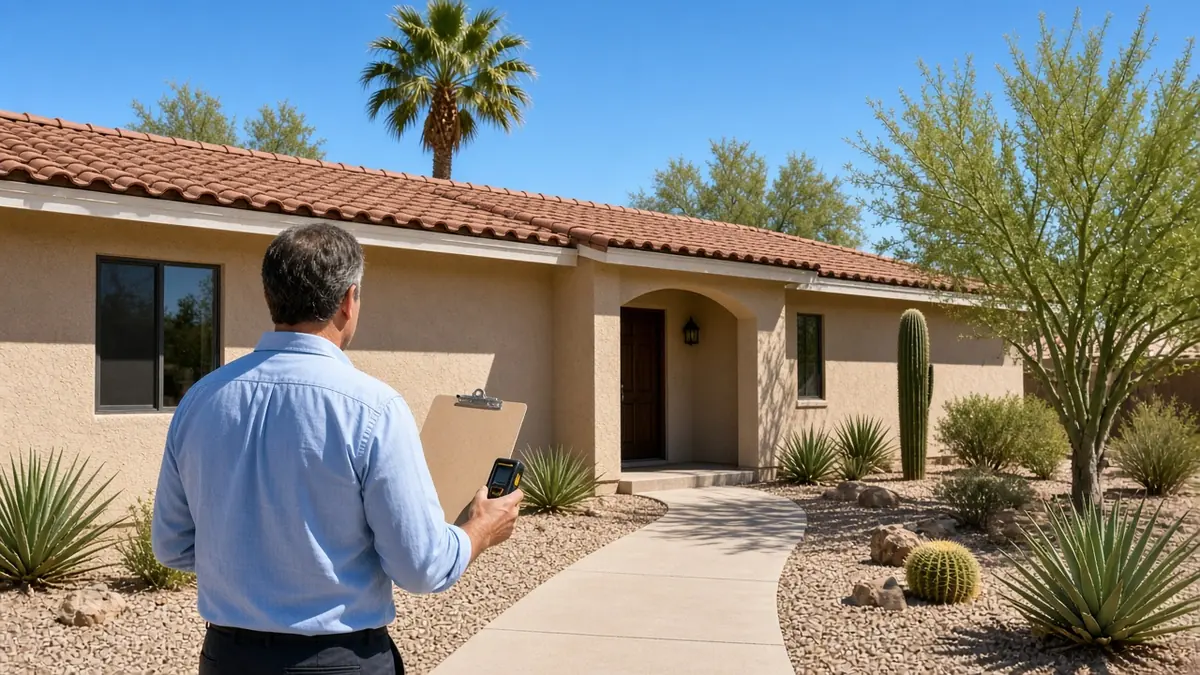
If you have a loan, your lender orders an independent appraisal: a licensed appraiser’s opinion of value based on the home’s condition and recent nearby sales. Your lender lends against the appraised value, not the price. If it comes in low and you kept the appraisal contingency, you have 5 days after notice to cancel and keep your earnest money.
If it comes in low
- Renegotiate the price,
- cover the gap in cash,
- split the difference with the seller, or
- cancel within 5 days (with the appraisal contingency). Wes negotiates for you.
Your homework
- Nothing to schedule; stay in touch with Wes and your lender.
- Know your gap and your four answers before the number lands.
- Read the appraisal lesson in Contract to close.
Next: loan approval and insurance.
Want to go deeper? Watch Lesson 5.3: Understanding the Appraisal in our Strategic Homebuyer course →
Step 10 of 13
Loan approval and homeowner’s insurance

Underwriting finalizes your loan while you put homeowner’s insurance in place. Under the standard contract, you deliver notice of loan approval without prior-to-documents conditions no later than 3 days before closing, so answer your lender fast and keep your finances steady.
Your homework
- Answer your lender the same day.
- Choose homeowner’s insurance early. Your lender needs proof before closing.
- Use the claims history to spot past claims on the home.
- Still hold steady: no new credit, job changes or big purchases.
Good to know
- Loan approval is due no later than 3 days before the closing date.
- Your Closing Disclosure shows final loan terms and cash to close; review it with your lender.
- Questions about the numbers? Ask before signing day, not at the table.
Next: title and your final walkthrough.
Want to go deeper? Watch Lesson 2.2: What Lenders Actually Evaluate in our Strategic Homebuyer course →
Step 11 of 13
Title and the final walkthrough
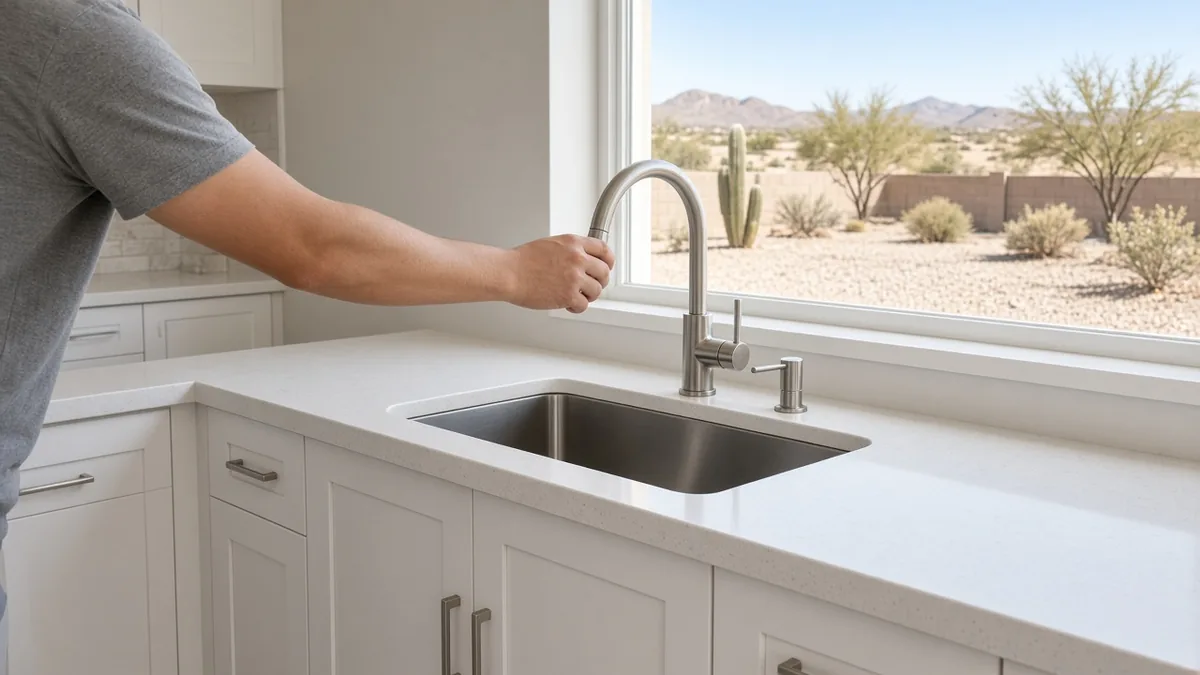
The title company confirms ownership, clears liens, issues title insurance and prepares your closing documents. Before closing, you do a final walkthrough to confirm the home is in substantially the same condition as when your offer was accepted and that agreed repairs are done.
Your homework
- Verify wiring instructions by phone at a known number.
- Schedule utilities, internet and movers for closing day.
- Do the final walkthrough, ideally a few days before closing.
Walkthrough checklist
- Agreed repairs done, with paid receipts.
- Appliances, AC, plumbing, pool equipment and garage openers working.
- Nothing left behind that shouldn’t be; nothing removed that conveys.
- If something’s wrong, speak up before closing.
Next: closing day.
Want to go deeper? Watch Lesson 5.4: Understanding the Title Company in our Strategic Homebuyer course →
Step 12 of 13
Closing day

You sign your loan and title documents, often a few days before closing, and send your funds as the title company instructs. In Arizona, closing happens when the deed records with the county recorder. That’s when the home is yours and you get the keys, unless the contract says otherwise.
Your homework
- Bring photo ID to signing.
- Send closing funds as the title company instructs, after verifying by phone.
- Collect keys, remotes, fobs and codes.
Keys in hand. Welcome home.
Next: your first 90 days.
Want to go deeper? Watch Lesson 5.4: Understanding the Title Company (The Closing Table) in our Strategic Homebuyer course →
Step 13 of 13
After closing: your first 90 days

The work doesn’t stop at the closing table. In your first few months, get to know the home before you change it: find the water shutoff and electrical panel, change the locks and air filters, keep every receipt and the inspection report, and rebuild your cash cushion before big projects.
Your homework
- Change or rekey the locks; change the air filters.
- Find the main water shutoff and the electrical panel.
- Keep a folder of receipts, warranties, closing documents and the inspection report.
- Watch for your first mortgage statement and property tax notices.
- Read Prepare for ownership.
Staying in touch
- Wes is here for questions, contractor referrals and market updates.
- Selling a home later? Read the Arizona selling guide.
- Loved working with us? Leave a quick Google review.
Want to go deeper? Watch Final Step: Prepare for Ownership in our Strategic Homebuyer course →
Arizona contract timelines
Key Arizona deadlines for buyers.
These are the default time periods in the Arizona REALTORS® Residential Resale Real Estate Purchase Contract (February 2026 version). Many can be changed in the contract, and every term is negotiable. New-construction builders use their own contracts. Your signed contract controls, so Wes tracks your actual dates from day one.
| Deadline | Default timing | Who acts |
|---|---|---|
| Loan application | 3 days after acceptance | Buyer |
| SPDS delivered | 3 days after acceptance | Seller |
| Insurance claims history | 5 days after acceptance | Seller |
| Loan Status Update | 10 days after acceptance | Buyer and lender |
| Inspection period | 10 days after acceptance | Buyer inspects, then BINSR |
| Seller’s BINSR response | 5 days after your notice | Seller; no response = refusal |
| Your decision after the response | 5 days | Buyer: cancel or proceed |
| Low appraisal cancellation | 5 days after notice of value | Buyer (appraisal contingency) |
| Loan approval | 3 days before closing | Buyer and lender |
| Close of escrow | When the deed records | Title company and county recorder |
Source: Arizona REALTORS® Residential Resale Real Estate Purchase Contract, February 2026. General information, not legal advice.
Buyer education
Go deeper with the Strategic Homebuyer course.
This guide is the map. The free Strategic Homebuyer course, built and taught by Lisa Shaw, is the full lesson plan: six steps with worksheets, from readiness and your comfort payment to offer strategy, contract to close, and your first 90 days. Free, no sign-up, at your own pace.
Keep going
More for Arizona buyers.
Buy with Wes
Open →Search homes
Open →Best deals
Open →New homes
Open →Moving here?
Open →Payment calculator
Open →Comparing cities? See the Gilbert, Chandler, Mesa, Queen Creek, San Tan Valley, Scottsdale and Tempe guides. Renting first? Read the Arizona renter’s guide. New to buying? Read the first-time home buyer guide, compare mortgage loan types, and try the home affordability calculator and rent vs buy calculator. Quick answers are in the real estate FAQ, and every guide is on our resources page. Prefer it on your phone? Open the Buyer Homework.
Questions
Arizona home buyer questions.
What are the steps to buy a house in Arizona?
Check your readiness, get pre-approved, sort your wants and needs, tour homes, and write an offer on the Arizona REALTORS® contract. After acceptance you deposit earnest money, complete the 10-day inspection period and BINSR, get the appraisal and loan approval, do a final walkthrough, and close when the deed records with the county recorder.
Do I need a buyer broker agreement before touring homes?
Yes. A written agreement with your agent is required before touring homes. It spells out what your agent does for you and how they’re paid.
How long is the inspection period in Arizona?
Under the Arizona REALTORS® residential resale purchase contract, the inspection period is 10 days after contract acceptance unless the parties write in a different number. It’s negotiable.
What is a BINSR?
The BINSR is the Buyer’s Inspection Notice and Seller’s Response, the Arizona REALTORS® form a buyer uses to list items to be repaired or addressed. The seller has 5 days to respond; no response counts as a refusal. If items won’t be corrected, the buyer has 5 days to cancel or proceed.
When is earnest money refundable in Arizona?
Under the standard contract, a buyer who cancels within the contingency periods, such as the inspection period, the BINSR response window, or the appraisal contingency, generally gets the earnest money back. Missing a deadline can put it at risk, so track every date with your agent.
What happens if the appraisal comes in low?
If the contract includes the appraisal contingency, the buyer has 5 days after notice of a low appraised value to cancel and receive the earnest money back. Many deals instead renegotiate the price, cover the gap or split it.
How much do I need for a down payment?
It depends on the loan. Some VA and USDA loans allow no down payment, FHA and many conventional loans allow small ones, and putting less than 20 percent down on a conventional loan usually means mortgage insurance. A lender can show you the options for your situation.
When does closing happen in Arizona?
Close of escrow happens when the deed is recorded at the county recorder’s office. Keys and possession normally transfer at that point unless agreed otherwise.

Written by
Wes Bender
Wes Bender is an Arizona REALTOR®, licensed since 2014, and leads Bender Group AZ with Lisa Bender at Done Deal Brokerage in Chandler. He guides buyers across the Phoenix area through every step in this guide. More about Wes.
Ready when you are
Ready to start looking?
A real conversation about your goals, your timeline and your next steps. No pressure, just a plan built around you.
Bender Group AZ, Wes and Lisa Bender
Done Deal Brokerage, 698 N Iowa St, Chandler, AZ 85225
(602) 844-4278 · [email protected]
This guide is general information about the typical Arizona resale purchase process, not legal, tax, lending or financial advice. Contract terms are negotiable and your signed contract controls.