Living Near the Loop 202 in Gilbert — How to Get the Access Without Living on the Freeway
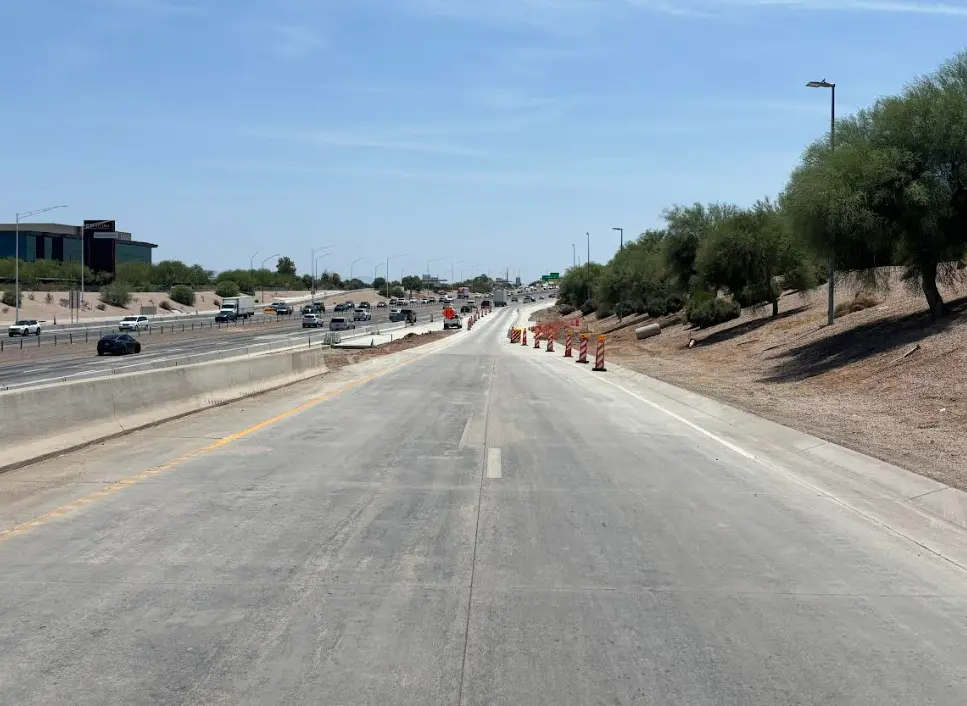
Living near the Loop 202 Santan Freeway in Gilbert, Arizona puts you minutes from Chandler, Mesa, Tempe, and Phoenix job centers — but homes closest to the freeway or on elevated segments can experience noise at or near ADOT's mitigation threshold of roughly 66–67 dBA. The real opportunity is knowing how to shop the street grid so you capture the commute benefit without the backyard hum.
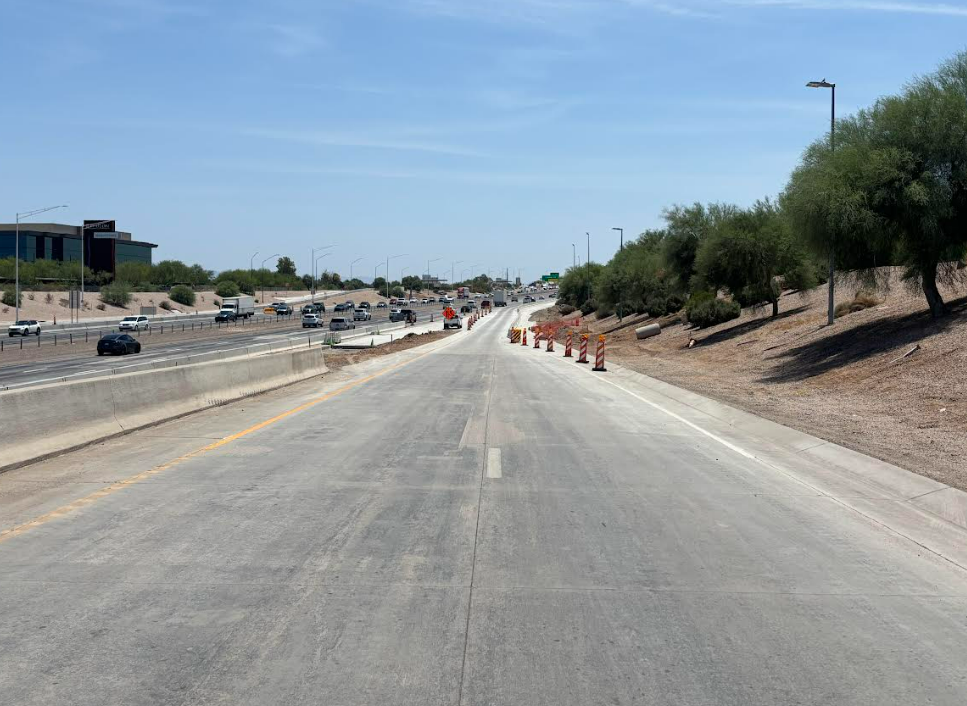
If you've shopped homes in Cooley Station, parts of Power Ranch, or anywhere in south Gilbert, you've already bumped into the Loop 202 question. The freeway is everywhere out here — and for good reason. It's one of the best access roads in the East Valley. But the moment a buyer sees that blue line on the map running behind a neighborhood, the same question always comes up: is the noise going to be a problem?
What the 202 Actually Gives You
Let's start with the upside, because it's real. The Loop 202 Santan Freeway wraps around a significant portion of Gilbert and connects you quickly to Chandler's tech corridor, downtown Tempe, Mesa, and central Phoenix. For dual-income households, households with kids in activities spread across the Valley, or anyone who travels for work, that access is a genuine quality-of-life upgrade.
Neighborhoods with direct 202 access — Cooley Station, parts of Power Ranch, south Gilbert subdivisions near Val Vista and Higley — regularly market on it for exactly this reason. Shorter commutes translate to more time at home, which matters more than buyers sometimes realize until they're six months into a longer drive.
What the Noise Actually Looks Like
Here's where we want to give you the honest picture. ADOT uses approximately 66–67 dBA as the noise threshold at which mitigation measures — sound walls, berms, and other barriers — are evaluated for homes, schools, and parks near freeway corridors. Homes that sit directly adjacent to the freeway, or on elevated grade positions where there's no buffer between the backyard and the traffic lanes, are the ones most likely to feel meaningful noise impact.
The important nuance is that "near the 202" covers an enormous range of actual experiences. A home two streets back from the freeway, separated from traffic by a commercial buffer, a six-foot berm, and a sound wall, is a completely different acoustic environment than a home whose back fence shares a wall with the on-ramp. Both show up as "close to the 202" on a map. They do not feel the same at 7 a.m. on a Tuesday.
How Wes and Lisa Shop the 202 Corridor for Buyers
When Lisa and I are working with buyers in these corridors, we're looking at a few specific things: lot position relative to the freeway, whether there's an intervening commercial or retail strip that acts as a noise buffer, the height of any existing sound walls, and the grade of the land. A home on the far side of a big-box retail strip from the 202 is often fine. A home on an elevated pad directly behind the sound wall is a different conversation.
The trade-off each buyer faces is approximately 10 to 15 extra minutes of daily driving versus the possibility of freeway ambient noise in outdoor living spaces. For many families in Gilbert, Arizona, that math clearly favors the access. For buyers who spend significant time in the backyard or on a patio, the specific lot position matters enormously.
The good news: the Southeast Valley has enough inventory along these corridors that with the right guidance, most buyers can find a home that delivers the commute benefit without sacrificing their outdoor living experience.
FAQ
Is it bad to buy a house near the Loop 202 in Gilbert?
Not necessarily — it depends heavily on the specific lot and subdivision. Homes near the 202 benefit from excellent East Valley access, and many are well-buffered by sound walls, berms, and commercial development. ADOT's noise mitigation threshold sits around 66–67 dBA, and homes a few streets off the freeway with good barriers often experience very manageable noise levels. We always recommend visiting the home at multiple times of day before making a decision.
What neighborhoods in Gilbert are closest to the Loop 202?
Cooley Station is one of the most 202-accessible master-planned communities in Gilbert, followed by portions of Power Ranch and several south Gilbert subdivisions near Val Vista and Higley. Each of these areas has sections that are more directly adjacent to the freeway and sections that are well-buffered — so the specific street and lot position matters more than the neighborhood name alone.
How much does living near a freeway affect home values in Gilbert AZ?
The impact varies significantly based on lot position and buffering. Homes immediately adjacent to freeway corridors with minimal barriers can see some price discount, while homes that enjoy 202 access but sit several streets back with sound walls in place often command a premium for the commute benefit. In competitive Southeast Valley markets, proximity to the 202 is frequently listed as a selling point by sellers and sought after by commuter buyers.
Want Help Navigating the 202 Corridor?
Wes and Lisa Bender have walked dozens of buyers through this exact decision in Gilbert, Arizona and the surrounding Southeast Valley. If you want someone to help you read a street grid and find the lots that get the access without the drawbacks — that's exactly the kind of thing we do.
Have questions about buying or selling in Gilbert or the Southeast Valley? We'd love to help.
 Schedule a free call: https://go.sphereglobalgroup.
 Text or call Wes: 480-330-4251
 Email: wes@sphereglobalgroup.com
Follow along on Instagram, YouTube, Facebook, and TikTok @gilbertwiththebenders for more local updates.
Helpful Links
- [ADOT Freeway Noise Information: https://azdot.gov/sites/default/files/media/2020/04/PROCEDURES%20FOR%20MEASURING%20FREEWAY%20NOISE%20LEVELS_0.pdf ] — Arizona Department of Transportation's overview of noise mitigation standards and freeway corridor studies.
Categories
Recent Posts